
Uzbekistan prefers to save water rather than divert it from Siberia
Water Resources Minister of Uzbekistan Shavkat Khamraev said the country finds it more profitable to reduce water consumption than to take part in the Siberian river diversion project. He spoke at a press conference on 19 November.
 Abdulrahman Sadikhli4 min read
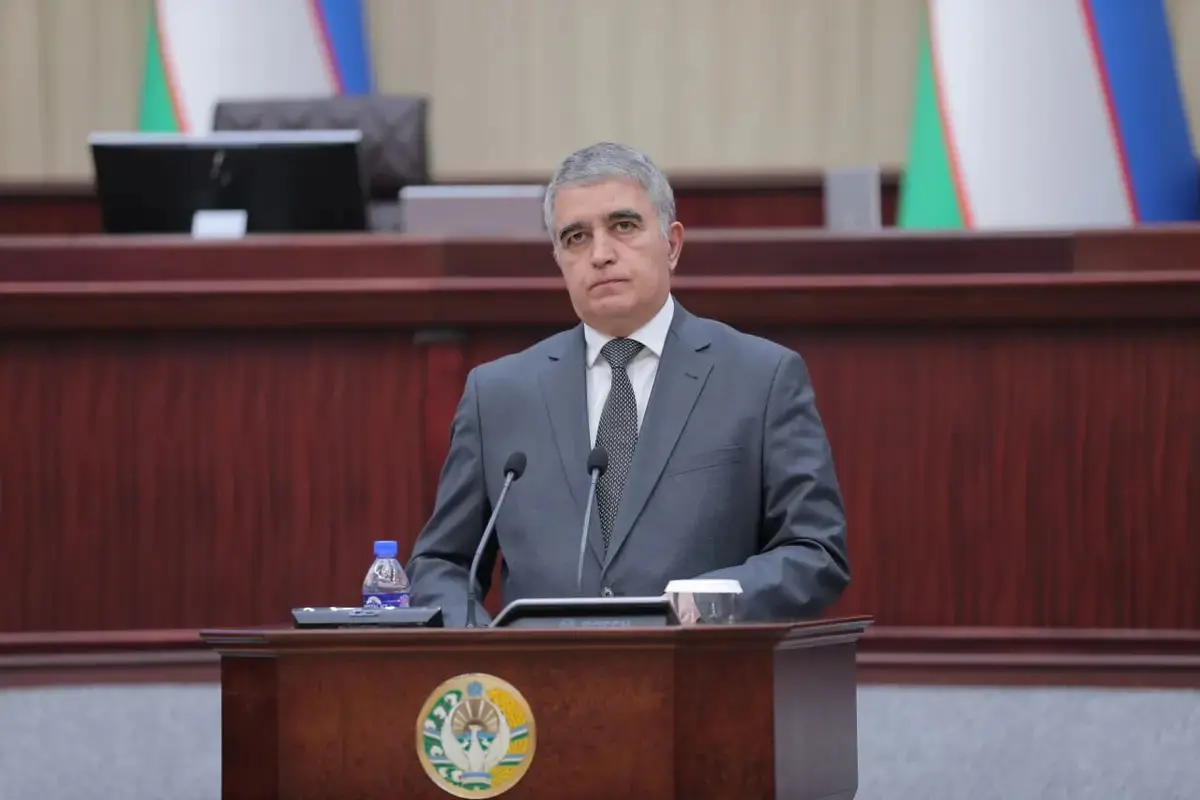
Uzbekistan considers it more profitable to reduce water consumption through the modernisation of irrigation infrastructure and water-saving technologies than to take part in the costly project to divert part of the Siberian river flow. Speaking about this at a press conference on 19 November, Water Resources Minister Shavkat Khamraev made the statement.
According to the minister, Russian scientists are again discussing the possibility of delivering water from Siberia to Central Asia. One of the options envisages an annual diversion of about 5 billion cubic metres of water with initial investments of more than $100 billion.
Khamraev recalled that similar plans were being developed back in the Soviet era. On 14 August 1986, the authorities of the USSR decided to halt work on the project.
Economy instead of diversion
The minister noted that Uzbekistan has already achieved significant water resource savings without large-scale expenditure on diverting water from other regions. In his words, the country is saving 11 billion cubic metres of water.
“We have already saved 11 billion cubic metres of water on our own. And we did not spend $100 billion doing so. If we add up all the costs of our measures, we may get about $5 billion,” Khamraev said.
According to his assessment, additional investments of $5–10 billion in the modernisation of irrigation infrastructure and water-saving technologies would allow the country to save even more water.
At the same time, the minister did not rule out that Uzbekistan may need additional water supply sources in the future. In his words, this will depend on climate change, the amount of precipitation and water volumes in the basins of transboundary rivers.
“Let us assume that by the 2050s, if no such natural disaster occurs, if water becomes less from year to year, and climate change continues to act against us, we will be forced to look for additional sources of water,” said the head of the Ministry of Water Resources.
The Soviet project and the modern idea
Khamraev also recalled that the Soviet project envisaged diverting about 27 billion cubic metres of water per year. In his view, such a scheme could benefit Uzbekistan, Russia, Kazakhstan and, partially, Turkmenistan. The minister did not rule out a return to this idea if further studies and negotiations confirm its feasibility.
In November 2025, scientists of the Russian Academy of Sciences proposed again to study the possibility of diverting part of the flow of the Amu Darya into Central Asia. Unlike the Soviet concept with open canals, the modern option envisages a closed system of pipelines. One of the options envisages the construction of seven pipeline lines, each about 2,100 km long. At the first stage, it is planned to transport about 5.5 billion cubic metres of water per year, and later to increase the volume three to four times.
According to the project leader of the company ‘IES Engineering and Consulting’ Dmitry Sozonov, initial investments may amount to no less than $100 billion. Annual operating costs are estimated at $700 million–1.5 billion, while construction of the main capacities may take no less than ten years. The Russian Ministry of Natural Resources previously noted that the project documentation had not been submitted to the ministry and that the discussion was at the scientific-expert stage.
Water conservation programmes in Uzbekistan
On 11 November, Khamraev told the Legislative Chamber that, thanks to water-saving technologies, the modernisation of irrigation infrastructure and digitalisation, the country had managed to save 10.69 billion cubic metres of water. About 5 billion cubic metres of savings were provided by water-saving technologies and laser land levelling. Another 3.14 billion cubic metres were preserved thanks to the repair, restoration and concreting of irrigation networks.
The water management development programme for 2025–2028 envisages the reconstruction of 2,551 km of irrigation networks and the introduction of water-saving technologies on 1.4 million hectares. According to the plans, by 2028 annual water savings should reach 14 billion cubic metres, and by 2030 — 15 billion cubic metres.
Source: uzdaily.uz