
EU blocks COP31 deal in Turkey without agreement
The final document of COP31 in Turkey, which included targets on electrification and adaptation financing, was not adopted due to EU objections. Disagreements centred on wording about fossil fuels.
 Yulduz Salimov3 min read
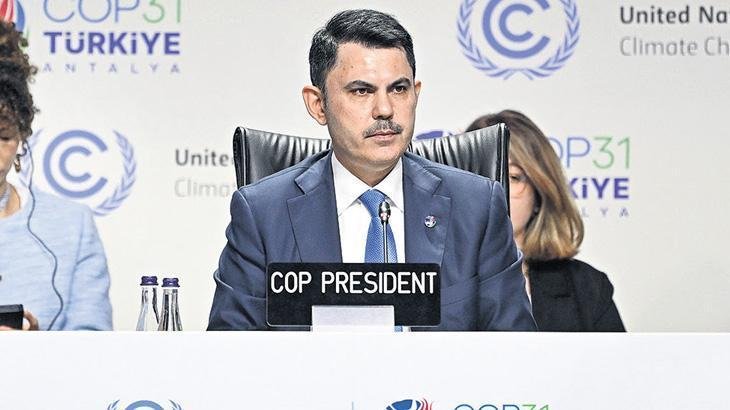
Negotiations at the 31st Conference of the Parties to the UN Framework Convention on Climate Change (COP31), held in Turkey, ended without an agreed decision. The final document, known as the "Cover Decision", was not adopted due to objections from the European Union.
The conference ran from 9 to 20 November, but it closed without agreement in the night of 22 November, according to reports. According to the Ministry of Environment, Urbanisation and Climate Change of Turkey, the EU made objections against the "Antalya Memorandum" before the document was put up for consideration. The EU representative, according to the ministry, expressed disagreement with the text at the technical level.
Several key elements were at stake. Among them were the 1.5-degree target, Turkey's "35 by 35" initiative on electrification, an increase to at least three times the adaptation financing by 2035, and technologies for abating, using and storing coal. Decisions on the final document require the agreement of all parties.
Tensions arose during the discussions. When the word reached the representative of Ghana, disagreements emerged in the hall. UN Climate Change Executive Secretary Simon Stiell moved toward the tribune to interrupt the speech of Minister Murat Kurum. Kurum said he was ready to give the floor to Stiell. Later, the minister met with Ghana's Minister Zanetor Agyeman-Rawlings, and Ghana reported that there had been no intention to interrupt the speech and that what happened was a misunderstanding.
According to AFP, the EU and several other countries did not support a text that did not mention fossil fuels. Ireland, which currently holds the EU presidency, said through its climate minister Darragh O'Brien that it would not approve a decision without a mention of fossil fuels. According to AFP, objections were also voiced by the Marshall Islands, Panama, Vanuatu and Belize. Developing countries criticised the exclusion of the target for adaptation financing of $120 billion from the text. According to AFP, Saudi Arabia and other oil-producing countries opposed the wording on fossil fuels. As AP reported, Russia also supported excluding a direct mention of fossil fuels from the text.
Presidency's position
Kurum told journalists that a decision not accepted by the parties cannot be adopted. According to him, the presidency had been working toward a result since the first day, and "We did everything we could."
There is no possibility of a decision emerging that the parties do not accept. We did everything we were going to do, but we must not dash the hopes of people around the world who are genuinely waiting for good news, by getting stuck on one word, one phrase.
Kurum also said that Turkey and Australia had been working toward reaching agreement since the first day. He noted that some countries, in his words, had brought into the negotiations topics unrelated to climate, which hampered the progress of the process.
UN Secretary-General Antonio Guterres described the failure to agree as "deep disappointment" that countries could not agree on a common text for the decision. He called on developed countries to step up efforts to increase adaptation financing and to fulfil their obligations to support the most vulnerable countries.
Source: milliyet.com.tr