
Houthi advance may shift regional balance of power: what it means for Azerbaijan’s oil
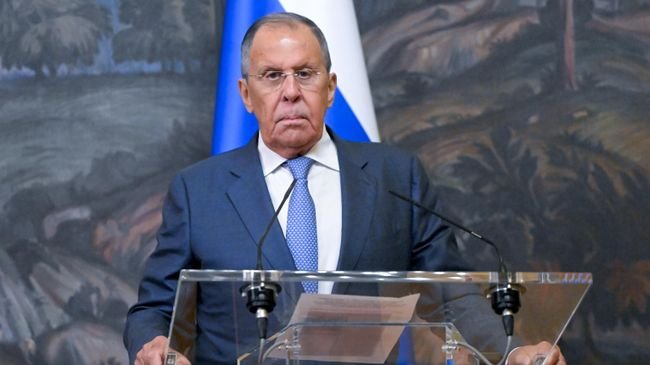
According to Yenicag.az, former diplomat and political analyst Rafael Ibrahimov says the strengthening of Houthi positions in the Red Sea and the Gulf of Aden will have a serious impact on the regional balance of power.
 Yulduz Salimov5 min read

According to Yenicag.az, former diplomat and political analyst Rafael Ibrahimov says the strengthening of Houthi positions in the Red Sea and the Gulf of Aden will have a serious impact on the regional balance of power.
In Ibrahimov's view, Iran benefits most from the current process, while the main burden of the war falls on Saudi Arabia.
The analyst, who previously served as a translator and specialist in Yemen since the Soviet era, recalled that he has worked there as a specialist. He said he therefore assesses the processes in Yemen not only on the basis of news reports but also on the basis of personal experience.
According to him, the situation on the ground has changed rapidly in recent months. Citing a Reuters report published on November 2, he said the Houthis have advanced to within 80 kilometres of Aden. He described this as the closest the movement has come to the city since the early stages of the war in 2015.
Ibrahimov said earlier that the Houthis had taken control of the port of Mokha. The National, meanwhile, reported that government forces had recently recaptured Dhubab and Mokha.
The analyst also addressed the naming of the movement. According to him, the name "Houthi" derives from the surname of the movement's leader, Abdul-Malik al-Houthi. The movement itself calls itself "Ansarullah".
Ibrahimov noted that the Houthis belong to the Zaydi branch of Islam. According to him, Yemen also has a Shafi'i population, and sectarian confrontation between Shia and Sunni communities is not observed in the country on a large scale.
Discussing relations with Iran, the analyst said the current situation is more favourable for Tehran. According to him, although the Houthis are one of Iran's main allies, they cannot be regarded as a proxy force that acts on Tehran's direct instructions.
Ibrahimov cited the Houthis' position during the 12-day war as an example. According to him, the movement adopted a neutral stance in a number of cases during that period.
"They are not a people who allow anyone to look down on them or give them orders," the analyst said.
Turning to Saudi Arabia, Ibrahimov said Riyadh is one of the parties that has suffered the most damage from the conflict. He noted that Saudi Arabia currently does not officially acknowledge being a party to the conflict, but recalled that the coalition was formed in 2015 on Saudi Arabia's initiative.
The analyst also explained why the Houthis have not agreed to demands related to lifting the blockade. According to him, ships entering the port of Hodeidah are held off Djibouti for months, and during this period part of the food supplies spoils.
Ibrahimov also noted the particular importance of the islands of Mayun (Perim) and Zuqar in the Houthis' recent advance. According to him, the creation of runways on these territories increases the likelihood that new military bases will be prepared there.
In the analyst's view, the Houthis regard this as preparation for the deployment of a US military contingent in that part of the Red Sea.
Reports published by Reuters and AFP on September 11 also said the Houthis had reached Mayun island and that government forces had withdrawn from the island.
Ibrahimov estimates that if the islands remain under Houthi control, their influence over the Red Sea will grow stronger.
At the same time, the analyst considers that the Houthis are not in a position to fully block the Red Sea. According to him, the movement may continue to create serious obstacles to shipping through the Red Sea, the Bab el-Mandeb strait and the Gulf of Aden.
However, further advance towards Aden is considered likely to have more serious consequences for regional countries.
The process could have a number of possible effects on Azerbaijan, and one of the main risks is linked to price fluctuations in the oil market.
The Baku–Tbilisi–Ceyhan pipeline passes through the Strait of Hormuz and ends at the Ceyhan terminal on the Mediterranean. Accordingly, Azerbaijan's oil export route does not run directly through the Red Sea.
However, rising geopolitical tension in the Middle East may affect the global oil market. According to a Reuters report published on September 11, the spot premium of Azeri BTC crude rose by more than $10 a barrel relative to Dated Brent.
The report cited attacks on shipping routes in the Middle East, Asian refiners turning to alternative crude supplies, and drone attacks on Russian Black Sea ports as reasons for the increase.
At the same time, it should be noted that the report did not directly link the rise in BTC prices to Houthi activity.
Exports of 15.7 million barrels of oil from the Ceyhan terminal are planned for October. In September, this indicator stood at 15.1 million barrels.
Overall, while the worsening security situation in the Red Sea and the Gulf of Aden does not directly hinder Azerbaijan's main oil export route, it is one of the factors that could affect global oil prices and the premium for Azeri crude.