
Kazakhstan and UN discuss steps to strengthen cooperation among nuclear-weapon-free zones
Kazakhstan's permanent representative to the UN and the UN Office for Disarmament Affairs discussed practical measures to strengthen cooperation among nuclear-weapon-free zones. The forum was held on October 27.
 Yulduz Salimov2 min read
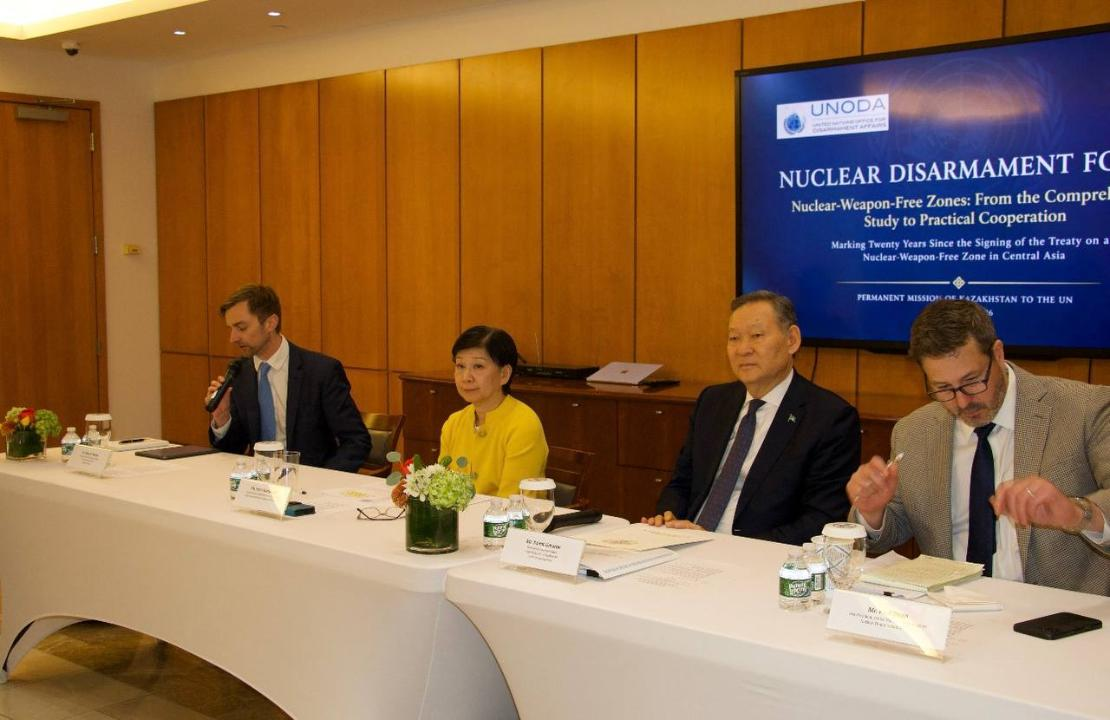
Kazakhstan and the UN discussed practical measures to strengthen cooperation among nuclear-weapon-free zones. The discussion took place at a forum organised on October 27 by Kazakhstan's Permanent Mission to the UN together with the UN Office for Disarmament Affairs (UNODA).
The forum was timed to two events: the 20th anniversary of the Semipalatinsk Treaty and the publication of a new comprehensive UN study on nuclear-weapon-free zones. According to the source, this is the first comprehensive assessment of such zones in the last 50 years.
Discussion and participants
Participants spoke about implementing the study's recommendations, strengthening cooperation between existing zones, and engaging with states that possess nuclear weapons.
Participants included the UN Under-Secretary-General and High Representative for Disarmament Affairs Izumi Nakamitsu, the Permanent Representative of Mexico to the UN Porfirio Tergi Munoz Ledo, and Vice President of the Nuclear Threat Initiative Paul Dean. Diplomats from UN member states, representatives of international organisations and experts also took part. Ryan Musto from the College of William & Mary (USA) moderated the discussion.
In his opening remarks, Kazakhstan's Permanent Representative to the UN Kairat Umarov said that the growth of nuclear risks underscores the need for effective cooperation mechanisms. In his words, the study's recommendations should become the basis for concrete joint initiatives. He also noted the contribution of Central Asia to regional security and the regime of nuclear non-proliferation.
Nakamitsu noted long-term partnership between the UN and Kazakhstan. She said the Semipalatinsk Treaty serves as an example of a successful regional diplomacy effort, and that the value of the study will depend on the practical implementation of its recommendations. According to her, UNODA is ready to provide further support.
Dean spoke about the potential of nuclear-weapon-free zones in reducing nuclear risks, drawing on the experience of Kazakhstan, ASEAN and Brazil and Argentina. He also spoke about plans to hold an international meeting in Vienna and to create an online resource for training diplomats.
Forum outcomes
At the close of the forum, Umarov proposed more closely coordinating the actions of five regional nuclear-weapon-free zones and Mongolia, in order to advance common priorities in dialogue with nuclear-armed states. It was reported that Kazakhstan, with UNODA support, will prepare a brief summary of the discussion with the main proposals of participants and possible directions for further cooperation.
Source: astanatimes.com


