

Azerbaijan’s new geopolitical strategy: Multi-vector diplomacy and regional integration
Following the 2025 Washington agreements, Azerbaijan has shifted the focus of its foreign policy from conflict resolution to shaping the regional order. The country is simultaneously deepening its ties with Europe, Central Asia, and the Shanghai Cooperation Organization.
 Fira Jalilova15 min read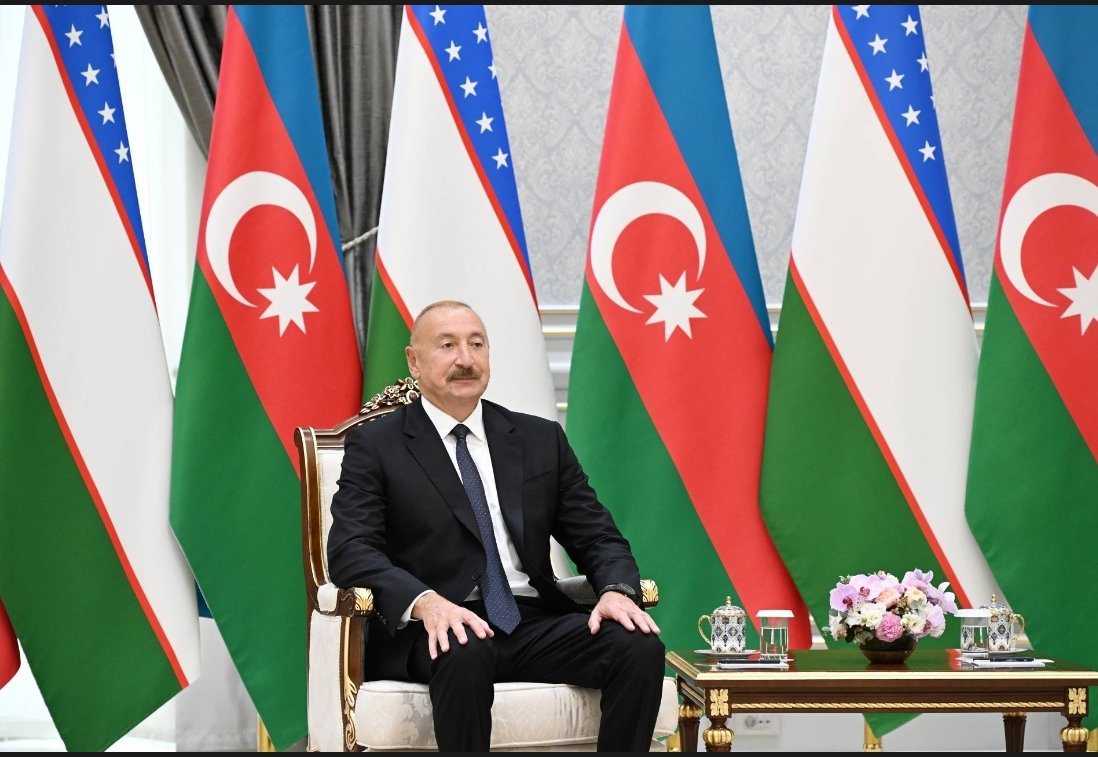
**Azerbaijan’s New Geopolitical Map: Why Baku Is Reaching Central Asia, the SCO and Europe at the Same Time**
One of the most important changes in world politics in recent years is that centers of power are no longer concentrated, as they once were, around only a few capitals. Relations among the United States, Europe, China, Russia, India, Türkiye and the countries of Central Asia are becoming more complex, flexible and multi-vector. In such a period, Azerbaijan is seeking to present itself not merely as a country located on the political map of the South Caucasus, but as a state connecting different geopolitical spaces.
To understand the main logic behind this policy, recent developments should be viewed not separately, but as interconnected and complementary stages.
In this sense, the initialing of the draft peace agreement between Azerbaijan and Armenia in Washington in August 2025, the expansion of Azerbaijan’s political dialogue with Europe, the rapid deepening of relations with Central Asia, and the new stage in relations with the Shanghai Cooperation Organisation are different parts of the same picture.
This is not simply about diplomatic visits and signed documents. The broader change is Azerbaijan’s attempt to move from being a party to a regional problem to becoming a participant in regional and global platforms of cooperation.
**A New Stage After the Restoration of Territorial Integrity**
One of the central issues in Azerbaijan’s foreign policy over the past decades was territorial integrity and the restoration of sovereignty. Following the 2020 war and the full restoration of sovereignty over Karabakh in 2023, a different question emerged for foreign policy: how can the geopolitical outcome achieved be transformed into a long-term political and economic advantage?
The answer could not be sought solely at the military and political levels.
New opportunities emerged for Azerbaijan: regional transport projects, expanded ties with Central Asia, energy and logistics cooperation with Europe, strategic relations with China, integration within the Organization of Turkic States, and at the same time closer engagement with platforms such as the SCO.
In other words, the center of gravity of Azerbaijan’s foreign policy gradually began shifting from the “conflict resolution” agenda toward an agenda of “participating in the formation of a new regional order.”
What happened in Washington on August 8, 2025, became one of the important political stages of this transition. The draft peace agreement between Azerbaijan and Armenia was initialed, while Azerbaijani President Ilham Aliyev, U.S. President Donald Trump and Armenian Prime Minister Nikol Pashinyan signed a Joint Declaration.
The significance of this event for Azerbaijan goes beyond the normalization of relations with Armenia. As the peace agenda progresses, Azerbaijan gains an opportunity to present itself less as a subject of the South Caucasus security problem and more as one of the initiators of regional connectivity and economic cooperation.
In August 2026, on the first anniversary of this process, the leaders of Azerbaijan and Armenia also emphasized the impact of the Washington agreements on the normalization of relations in the region. The Azerbaijani side is already reporting concrete steps in transit and economic relations with Armenia.
This is a sign that diplomacy is moving into an economic phase.
**What Does “Middle Power” Mean?**
One of the most important political theses in the material is the idea of Azerbaijan becoming a “middle power.”
One point should be emphasized here: “middle power” is not a legal or official state status. It is an analytical concept in international relations theory describing a state whose military, economic and political capabilities are limited compared with global superpowers, but are sufficient to exert influence beyond its immediate region.
The main factor bringing Azerbaijan closer to this category is not the country’s complete alignment with any single center of power. On the contrary, Baku is seeking to operate simultaneously across different platforms.
Relations with the United States are developing.
Energy, transport and political dialogue with Europe are continuing.
Strategic partnership with China is deepening.
Relations with Turkic states represent a distinct political track.
Relations with Central Asia are rapidly expanding.
Cooperation with the SCO is increasing.
Relations with the Islamic world are being maintained.
The main advantage of this multi-vector policy is that Azerbaijan is expanding its room for foreign-policy maneuver.
In other words, the question is increasingly shifting from “Which camp is Azerbaijan in?” to “On which platforms can Azerbaijan pursue its interests?”
**Relations with Europe: Baku Is No Longer Merely an Energy Partner**
Azerbaijan’s relations with Europe should also be viewed through this prism.
For a long time, Azerbaijan was regarded by Europe primarily as a country important for energy security. Today, however, the agenda of relations is expanding: alongside energy, transport, digital connectivity, regional security and political dialogue are becoming increasingly important.
One symbolic indicator of this is the decision to hold the European Political Community summit in Azerbaijan in 2028. At a meeting in May 2026, the President of Azerbaijan invited the European Political Community to hold its 2028 summit in Azerbaijan, and the proposal was accepted. The European Council’s information also confirms Azerbaijan as the host country for the 2028 summit.
This is not an ordinary protocol event.
The European Political Community is a platform created for political dialogue and cooperation across the European continent. Hosting such a meeting in Azerbaijan sends a political message that the country’s relationship with Europe is not limited to energy and economics.
More importantly, in 2028 Azerbaijan will become a point where both the European and South Caucasus agendas intersect on this platform.
**Central Asia: A New Center of Gravity in Azerbaijan’s Foreign Policy**
One of the most significant changes in Azerbaijan’s foreign policy in recent years has been the growing importance of Central Asia.
Kyrgyzstan is a particularly notable example.
Diplomatic relations between Azerbaijan and Kyrgyzstan were established on January 19, 1993. Azerbaijan’s embassy began operating in 2007, while Kyrgyzstan’s embassy in Azerbaijan began operating in 2014.
However, relations did not reach their current level overnight.
Diplomatic relations were established in the 1990s.
In 2022, the two countries signed a Joint Declaration on Strategic Partnership and adopted a memorandum on the establishment of the Interstate Council.
In 2024, an important event demonstrating the humanitarian dimension of the relationship took place: the foundation stone was laid for a 528-student school named after Aikol Manas in the village of Khidirli, Aghdam, with financial support from Kyrgyzstan. The presidents of Azerbaijan and Kyrgyzstan laid the foundation stone of the school.
The political significance of this fact lies not only in the construction of the school.
The participation of a Central Asian country in the reconstruction of Karabakh moved relations beyond diplomatic statements and brought them to the level of regional support for Azerbaijan’s post-war reconstruction.
**2026: A Turning Point in Baku–Bishkek Relations**
The most important stage of this process took place on July 30–31, 2026.
During President Ilham Aliyev’s state visit to Kyrgyzstan, Azerbaijan and Kyrgyzstan signed a Treaty on Allied Relations. On the same day, a decision of the third meeting of the Interstate Council was adopted. This demonstrated that the relationship had moved beyond a stage described simply in terms of “brotherhood” and “strategic partnership” to a higher political level.
Moreover, the timing of the visit was not accidental.
On July 31, the leaders of Azerbaijan, Kyrgyzstan, Uzbekistan, Kazakhstan, Tajikistan and Turkmenistan gathered at an informal meeting of the heads of state of Azerbaijan and Central Asian countries.
Thus, Baku–Bishkek relations are moving beyond a bilateral framework and becoming part of Azerbaijan’s broader political relations with Central Asia.
This point is particularly important: Azerbaijan is entering Central Asia not only through brotherhood and cultural affinity, but also through transport, energy, trade and geopolitical connectivity.
**The SCO: Azerbaijan Is Not at the Door, but Inside the Platform**
Another important direction of this process is the Shanghai Cooperation Organisation.
The SCO was established on June 15, 2001, by China, Russia, Kazakhstan, Kyrgyzstan, Tajikistan and Uzbekistan. In subsequent years, India and Pakistan became full members in 2017, Iran in 2023, and Belarus in 2024.
Azerbaijan obtained dialogue partner status with the SCO in 2016.
Here too, the process has developed gradually.
Azerbaijan initially participated as a dialogue partner and later increased its participation in the organization’s summits. In 2022, President Ilham Aliyev attended the summit in Uzbekistan as an honorary guest; in 2024, he participated in SCO events in Kazakhstan; and in 2025, in SCO events held in Tianjin, China.
The 2025 SCO summit marked a stage of structural change within the organization itself.
The heads of state decided to abolish the “observer” and “dialogue partner” statuses and create a unified “SCO partner” status. However, according to the organization’s official information, the previous statuses formally remain in effect until the decision is fully incorporated into the relevant legal documents.
This detail is important. In the initial version of the material, Azerbaijan’s status is presented categorically as having already been legally changed to “SCO partner.” A more precise formulation is that the 2025 decision created the new “SCO partner” status and launched the process of merging the previous statuses into this unified status.
This may appear to be a technical detail. In diplomatic documents, however, such details are quite significant.
**Why Transport?**
Another notable aspect of Azerbaijan’s policy toward the SCO and Central Asia is transport corridors.
The East–West and North–South routes are not merely economic projects for Azerbaijan. They are instruments that increase the country’s geopolitical weight.
Because being important on the map does not necessarily require having a vast territory. Sometimes it is enough to be located in the right place and turn that geography into functioning infrastructure.
This is where Azerbaijan’s advantage becomes apparent.
Routes across the Caspian Sea are important for Central Asian countries seeking access to Europe. The role of the South Caucasus in Europe’s connections with Asia is growing. Alternative trade routes are important for China. Access to Central Asia is important for Türkiye.
Azerbaijan is one of the geographical points where these routes intersect.
From this perspective, transport corridors are more than economic projects for Baku: they are geopolitical capital.
**A Symbolic Line Stretching from Nizami Ganjavi to Manas**
Azerbaijan’s Central Asia policy has not only economic and political dimensions.
The erection of a bust of Nizami Ganjavi at the SCO headquarters in Beijing in 2021, marking the poet’s 880th anniversary, is one of the symbols of the cultural dimension of this policy.
On the other hand, the naming of a school in Baku after Chingiz Aitmatov and the erection of his monument, the operation of the Heydar Aliyev School in Bishkek, and the construction of the Aikol Manas School in Khidirli village of Aghdam do not appear to be isolated events.
They represent a kind of reciprocal exchange of symbols.
Azerbaijan reaches Central Asia not only through political delegations from Baku, but also through Nizami, Heydar Aliyev, Karabakh and Azerbaijani culture. Central Asia, in turn, is represented in Azerbaijan through cultural symbols such as Aitmatov and Manas.
Such relations may prove more enduring than political documents.
**Why Is the 2026 Bishkek Summit Important?**
Today — August 31, 2026 — another event is being added to this process: the 2026 SCO summit is being held in Bishkek. According to official SCO information, the main meeting at the level of heads of state is taking place in Bishkek on August 31–September 1, while the “SCO Plus” format is also part of the summit program.
The summit coincides with the 25th anniversary of the establishment of the SCO.
Kyrgyzstan holds the organization’s chairmanship in 2025–2026.
Therefore, there is also an interesting political sequence between President of Azerbaijan Ilham Aliyev’s state visit to Bishkek in July 2026 and the SCO summit being held in the same city at the end of August and beginning of September.
In July, Azerbaijan–Kyrgyzstan relations are elevated to the level of an alliance.
At the end of August, the same city becomes one of the SCO’s major diplomatic platforms.
This is an important detail demonstrating that Baku’s policy toward Central Asia is not a collection of separate visits, but part of a consistent regional strategy.
**Which Direction Is Azerbaijan Moving In?**
This is where the most interesting question arises.
It is no longer sufficient to explain Azerbaijan’s policy simply as “moving closer to the West” or “turning toward the East.”
Azerbaijan is simultaneously discussing the regional peace agenda with the United States in Washington, preparing to host the European Political Community summit, participating in Chinese and SCO platforms, expanding relations with Central Asian states, and strengthening political integration with the Turkic world.
This is a multi-vector policy of geopolitical maneuvering rather than a classic choice of one direction.
Its main condition is one thing: protecting national interests in relations with different centers of power.
A more complex task now lies before Azerbaijan. If the main objective of the previous stage was the restoration of territorial integrity, the main objective of the new stage is to transform the political victory into economic, transport, diplomatic and institutional advantages.
This is a more difficult task.
Winning a war does not automatically create geopolitical advantage. It requires maintaining peace, expanding economic ties, making corridors operational, attracting investment, deepening diplomatic partnerships and maintaining a balance among different centers of power.
**Azerbaijan’s Main Advantage: Combining Geography and Diplomacy**
When Azerbaijan’s current foreign-policy trajectory is viewed on a single map, the picture becomes clearer.
Europe to the west.
The Caspian Sea and Central Asia to the east.
Russia to the north.
Iran to the south.
Strategic alliance with Türkiye.
Growing relations with China.
A new political agenda with the United States.
Deepening integration with the Turkic world.
Expanding cooperation with the SCO.
Managing so many different directions simultaneously is not easy. Therefore, Azerbaijan’s main diplomatic task is not so much to choose a side as to increase its own weight.
This is precisely where the essence of the “middle power” concept emerges.
Being a middle power does not mean determining the entire global agenda like the major powers. It means influencing the formation of the regional agenda, playing the role of a mediator or connector between different sides, bringing economic and political projects together, and making one’s position heard on international platforms.
Azerbaijan’s diplomatic activity in recent years demonstrates movement in this direction.
**And All Roads Lead Back to Baku**
Perhaps the most interesting change in Azerbaijan’s foreign policy in recent years is this: Baku no longer wants to appear merely as a capital reacting to developments around it.
The Washington agenda of 2025 opened a new stage in Azerbaijan–Armenia relations.
The 2026 meeting in Cholpon-Ata elevated Azerbaijan–Kyrgyzstan relations to the level of an alliance.
The 2026 Bishkek summit once again brought Azerbaijan’s participation in the Central Asian and SCO space to the forefront.
And in 2028, hosting the European Political Community summit in Azerbaijan will make Baku the host of one of the important platforms for European political dialogue.
All of these developments can be read as separate events.
But when they are placed along one line, a different picture emerges:
**restoration of territorial integrity → peace agenda → regional connectivity → integration with Central Asia → active participation in the SCO and other multilateral platforms → expansion of political dialogue with Europe.**
This sequence illustrates the main contours of a new stage in Azerbaijan’s foreign policy.
The question is no longer which side Azerbaijan stands on.
The question is how important Azerbaijan itself can become on a map where different sides are connected to one another.
And it appears that this is precisely the main objective of Baku’s current strategy: to turn geographical position into political capital, political capital into economic opportunities, and economic opportunities into long-term national power.
How successful this strategy will be will be determined not by statements, but by the corridors that open in the coming years, the investments that are implemented, the new political alliances that are established, and, most importantly, how sustainable the peace achieved will prove to be.